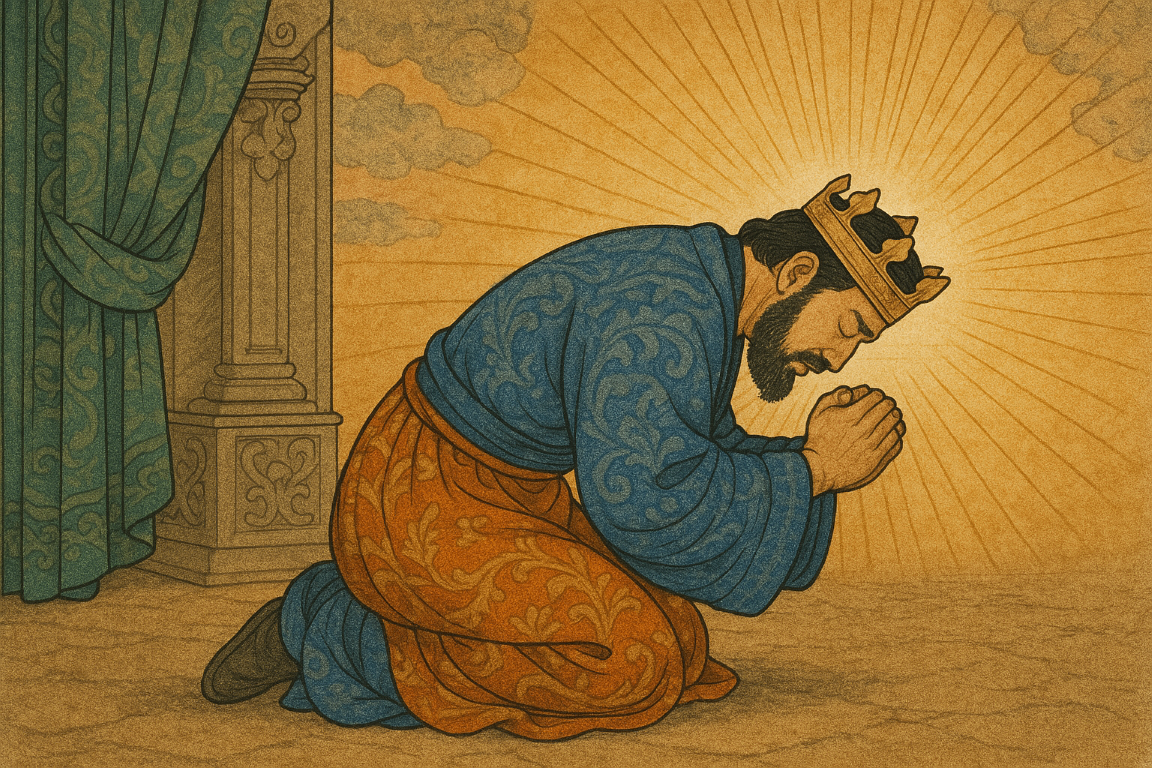
It seems that worship has become a central part of the work we do here. Whether it’s leading praise meetings, gathering at home to pray and lift praises to the Lord, or even climbing mountain peaks to exalt His name—we are constantly drawn into His presence through worship. Even during evangelistic outreach in the park in central Osaka, praise and worship form the heartbeat of the ministry. Every time we gather to counsel or pray with others, we begin by setting our focus on Jesus through worship.
This makes me wonder: Has God intentionally made worship the foundation of what we do in Japan?
When I first started going to church, I never really understood the purpose of singing the four or five songs before the sermon. It reminded me of school assemblies—where we’d begin with the national anthem, more out of ritual than anything else. Church felt similar at first. We’d all stand, sing to and about God with varying levels of enthusiasm, but I figured the real reason I was at church was the sermon. After all, that was the meat of the service… or so I thought.
After a couple of years, the youth pastor asked if I’d consider helping out with the youth group—mainly Sunday night services and occasional events. And then came Easter Camp, a massive four-day gathering with around 4,000 young people and leaders from across the region. It was Easter Camp that changed the way I viewed the ‘church songs.’
I saw what worship could be. The songs weren’t just filler—they were a doorway. An invitation to meet with God, not just sing about Him. Over those few days, I watched worship leaders guide the kids—some hesitant, some hungry—into moments of real encounter. It wasn’t about the music. It was about His presence. And suddenly, the singing that once felt like formality began to make sense to me.
By the time I attended my third Easter Camp, I was starting to feel at home in the rhythm of it and even looked forward to the times of extended worship. One night after the meeting, our youth were sitting around—talking, laughing, and playing cards under the stars. A guitar materialised and began making its way around the circle, passed from one person to the next. One by one, they each strummed a tune. It seemed as if everyone could play. Everyone… except me.
Right!
At 28 years old, I decided it wasn’t too late to try. I dug out the old, cheap nylon-string guitar from my parents’ house and turned to the only teacher I had access to: YouTube. Slowly, I began to grasp the basics and started practising worship songs at home.
A few years later, I still hadn’t become much of a guitarist. My progress was modest at best. But then, one Sunday, I felt the Lord nudge me in a direction I didn’t expect—He asked me to close out a sermon by singing a song up front. Just me and the old guitar. No band, no backup. Terrified, but wanting to be obedient, I said yes.
I rehearsed over and over. I did everything I could to prepare. When the day came, I adjusted the mic stand, took a deep breath, and began.
I’m not sure how much the song moved the congregation. To be honest, I was too focused on keeping myself together. It didn’t help that, halfway through, the mic stand—thanks to my poor tightening job—decided to slowly lower itself towards the floor. It was awkward, a little funny, and very humbling.
It didn’t really matter. I simply obeyed and did what the Lord was asking of me. After another year or so, I found myself leading the four or five songs before the ‘meat’ of the service. I never sought the privilege, but I welcomed the opportunity to serve. Still, I had the sense that there was more to worship than I fully grasped.
We now live on a mountain that borders Osaka and Nara prefectures in the Kansai region of Japan—a place that has served as a spiritual centre for Buddhism for over 600 years and the site of spiritual practices that date back more than two millennia. In the past, it’s been dubbed “Spirit Mountain,” reflecting its long-standing spiritual significance. Today, it remains home to ancient shrines, Buddhist temples, and various New Age and spiritual groups. When we were looking for a place to live, we noticed that many property listings proudly highlighted their proximity to the region’s premier “power spot”—a term commonly used in Japan to describe what they perceive to be a significant spiritual location.
In the Bible, God’s people very often found themselves in spiritually hostile environments, where the dark spiritual practices of their neighbours tempted, tested, and oppressed them—often resulting in natural warfare. This has caused me to reflect:
How do you live well in a place where there is so much spiritual activity surrounding you,
and not be oppressed by it?
Jehoshaphat, the fourth king of Judah, offers a powerful example. Scripture says, “The Lord was with Jehoshaphat, because he walked in the former ways of his father David; he did not seek the Baals, but sought the God of his father” (2 Chron. 17:3). Because of his faithfulness, God gave him riches and honour in abundance. But the time came when his enemies—Moab, Ammon, and others—rose up against him in great number.
The Bible says that when the bad news was reported to the king, he “feared and set himself to seek the Lord” (2 Chron. 20:3), beginning with the proclamation of a fast throughout all Judah. It goes on to say that he gathered the people of Judah and Jerusalem to the house of the Lord, where he gave a moving, heartfelt prayer, finishing with these words:
“…we have no power against this great multitude that is coming against us; nor do we know what to do, but our eyes are on You” (2 Chron. 20:12).
Jehoshaphat then bowed low with his face to the ground—and all the people followed, humbling themselves before the Lord. In that moment, as enemy forces closed in, they didn’t prepare for battle. They didn’t scramble for defences. With their faces on the floor… they worshipped. Then Jehoshaphat summoned the Levites—descendants of the Kohathites and Korahites—and charged them to rise and praise the Lord, lifting their voices loud and high (2 Chron. 20:18–19).
Faced with overwhelming threat, the king’s response wasn’t political or military—it was spiritual. He turned to the only one who could truly help. They didn’t have a plan. They didn’t know what to do. But in worship, they fixed their eyes on the One who always knows.
And the story doesn’t end there. After seeking the Lord and speaking with the people, Jehoshaphat made a surprising move—he appointed singers to lead the charge. As the army advanced, it wasn’t swords or spears at the front—it was voices lifted in worship, declaring:
“Praise the Lord,
For His mercy endures forever.” (2 Chron. 20:21)
And at the very moment they began to sing and praise, the Lord acted. He set ambushes against the invading armies of Ammon, Moab, and Mount Seir, and they were defeated. The battle was won—not by Judah’s strength—but through the power of God, moved by the worship of the people.
If you’re anything like me, you’ve probably heard people talk about spiritual warfare in church—but felt that it’s distant, abstract, or even irrelevant. Sure, we might acknowledge the spiritual conflict in principle and enthusiastically teach our kids about the armour of God from Ephesians 6. But in the rush of daily life, with its pressing problems and practical demands, spiritual warfare rarely feels like our immediate concern. Jehoshaphat reminds us that life’s battles can be fought and won with our faces on the floor and our hearts lifted to God in worship.
In Japan, we quickly discovered that we were in hostile spiritual territory—and that spiritual warfare is not something we can just theorise about. Worship has become more than a devotional act—it’s our spiritual powerhouse. Even in a land marked by generations of idol worship, something shifts when we fix our eyes on Jesus. In that moment of worship, we’re not standing alone—we’re aligning ourselves with heaven’s host. We’re joining the spiritual majority.
I’ve come to see that worship isn’t just the soundtrack of ministry—it’s the strategy. It is both our shield and our sword in a land thick with spiritual opposition. Whether on mountaintops or in city parks, alone at home or at our praise meetings, worship has become our way of saying: “Our eyes are on You.” And when we do this, we’ve seen God move—time and again.
Sing to the Lord a New Song
Japanese Praise Songs
The Japanese have a deep love for singing. From kindergarten classrooms and school events to sports games and, of course, karaoke bars—music is woven into everyday life. But most beautifully, they sing praises to God with heartfelt devotion. It’s been such a blessing to worship in the Japanese language, especially through songs written by Japanese believers. Here’s a wonderful example of Japanese praise. Enjoy!